Workplaces run on regimens. Meetings at 9, deadlines on Thursday, coffee at eleven. Then someone grips the side of a desk, slides to the flooring, and the clock quits. I have actually sat in a lot of follow this link conference rooms and production line where the distinction in between a disaster and a close phone call came down to a single person that had actually taken a cpr course and bore in mind the rhythm of compressions. That is the quiet power of first aid and cpr training at first aid training sessions work. It turns spectators right into -responders, minutes right into a lifeline, and an office right into a much safer area to spend a 3rd of your life.
The truth behind the need
Cardiac arrest does not wait on paramedics to show up. For every single minute without upper body compressions and very early defibrillation, survival drops by approximately 7 to 10 percent. In city centers, ambulance response can be 6 to 12 mins, longer in commercial parks or remote sites. By the time progressed help reaches the scene, the inquiry is simple. Did any person begin premium quality cpr?
I have interviewed supervisors who still remember the shade leaving a coworker's face while they screwed up with a phone. I have also watched a payroll staff step in, direct a colleague to call emergency situation services, start compressions, and save a life prior to lunch. Training is the distinction in between panic and activity. It does not transform your team into paramedics, it buys priceless time until professionals take over.
What excellent quality CPR really looks like
Quality matters. Pressing on the chest is insufficient. A strong cpr training program drills these fundamentals until they really feel automatic:
- Hand placement at the center of the chest, in between the nipples, arms locked, shoulders piled over hands. Depth of 5 to 6 centimeters for grownups, permitting full recoil in between compressions. Rate of 100 to 120 compressions per min, with marginal interruptions. Early use of a computerized exterior defibrillator when available, following the motivates without overthinking them. A strong bystander system: one person compresses, one takes care of the aed and phone, one regulates the scene.
A quick anecdote seals the factor. In a storage facility in Newcastle, a forklift operator fell down near the packing bay. Two employees had simply ended up a first aid and cpr course the week previously. One started compressions while the various other got the aed placed near the time clock. The aed encouraged a shock. They complied with the motivates, revolved every two minutes to prevent tiredness, and had return of pulse before the ambulance drew in. The paramedic later on told me the chain of survival was book. The difference was not good luck, it was muscular tissue memory built during practice.
Why employers ought to have this
Safety responsibilities are not just lawful checkboxes. They are social dedications. Purchasing first aid courses and cpr courses signifies a practical priority: we care for each other right here. Past values, business case is clear.
Lost-time occurrences from medical emergency situations extend beyond the individual influenced. Not really prepared teams ice up longer, spirits dips, and the after-action spiral begins. Where there is normal first aid training, the same case comes to be a drill executed under pressure, with clear functions and swift handover. Insurance carriers and regulators notice the distinction. Some jurisdictions and markets mandate a minimal variety of licensed first aiders per shift or per headcount. Even where it is not mandated, auditors and customers regularly ask for proof of a first aid certificate coverage plan during prequalification.
From a threat supervisor's seat, I believe in direct exposures and reductions. You can not get rid of the danger of a cardiac event among a workforce that mirrors the general population. You can, however, lower effect extent with an experienced action, easily accessible aeds, and an easy plan practiced at the very least annually.
The composition of a reliable course
Not all cpr training is equivalent. A solid program balances evidence-based material, practical technique, and crisp evaluation. When evaluating a supplier, whether a nationwide body or a regional first aid pro you have actually dealt with previously, I seek numerous top qualities in the first session and follow-up.
First, educational program that lines up with present consensus guidelines. Standards develop, and your program needs to mirror updates on compression-first techniques, the duty of rescue breaths in various circumstances, and the most recent referrals on opioid overdose action with naloxone when it is part of your risk profile.
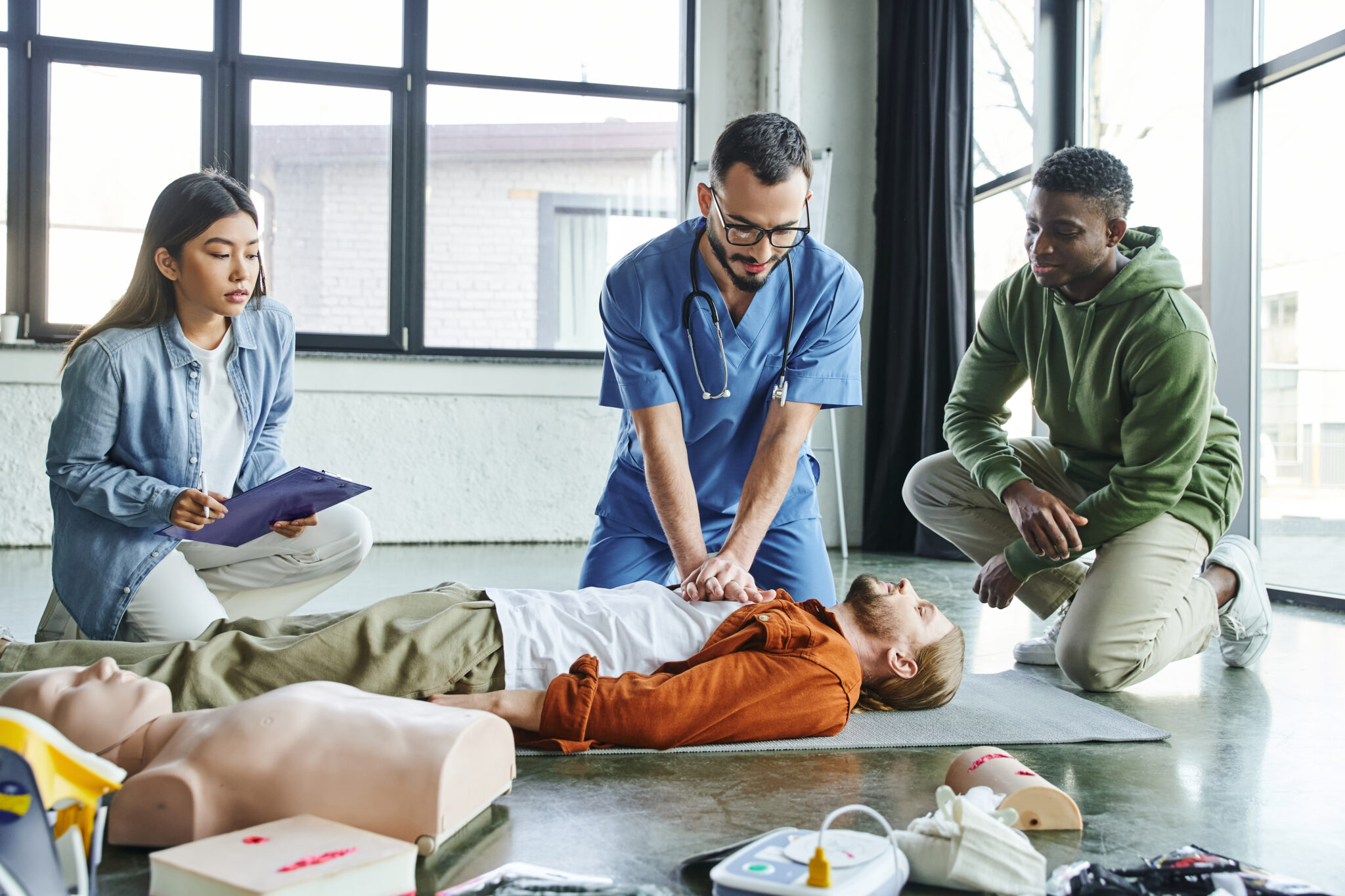
Second, hands-on time. A lecture-heavy cpr course produces note takers, not -responders. Quality courses put manikins on the flooring, aeds in hands, and offer each individual numerous cycles of compressions with comments tools that measure depth and rate. When a trainee's arms shake after 2 minutes, that is a lesson you can not receive from a slide deck.
Third, sensible context. Offices, factories, retail floors, and building sites existing various barriers. A good trainer adapts situations. Just how do you perform cpr on a colleague wedged between racking? How do you clear room in a jampacked front office? Just how do you lead emergency situation solutions through a protected entrance in the evening? Personalization turns abstract assistance into your group's plan.
Finally, an evaluation that suggests something. A credible first aid and cpr course does not hand out a first aid certificate for participation alone. It confirms abilities with a brief written part and a functional analysis. Many grownups pass, however they ought to gain it.
Beyond CPR: the full first aid picture
Cardiac apprehension grabs headings, however the majority of workplace occurrences fall under other categories: blood loss, cracks, burns, allergies, diabetic emergencies, heat health problem, fainting, and seizures. A wide first aid course complete the capability. When I advise business, I prefer a modular strategy. Core cpr and aed for all personnel, prolonged first aid training for designated -responders, and situation drills that rotate via likely events on your site.
Control of major blood loss matters in setups with equipment, sharp devices, or automobile traffic. Tourniquet usage is a skill finest discovered with hands on technique and a clear understanding of when it is appropriate. A work environment that supplies tourniquets however never ever trains on them is joking itself.
Allergy management is another space. If your workforce or customer base includes individuals with serious allergic reactions, make sure first aiders are trained to acknowledge anaphylaxis and use an epinephrine auto-injector. Numerous events I have actually examined started as a "mild rash" and escalated since no person knew when to act.
Heat tension and dehydration appear in storage facilities without environment control and on construction websites in summer. A short seasonal refresher that covers acknowledgment, hydration methods, and early cooling techniques prevents healthcare facility runs in January across the Southern Hemisphere or July in the Northern one.
Certification, refresher course cycles, and keeping abilities sharp
Skills discolor. That is not a character imperfection, it is human. If you desire your group to do under tension, prepare for it. Many first aid certificates and cpr certificates carry a legitimacy period of one to 3 years depending on regulatory authority and company. Experience reveals me that the half-life of recall for irregular responders is closer to 6 to 9 months.
Schedule a cpr correspondence course yearly for marked responders, even if formal recertification schedules every two or 3 years. Much shorter touchpoints enhance core steps, update adjustments, and let team run a situation or 2. If spending plan is limited, a mixed model functions well. On-line prework for understanding, adhered to by a focused in-person session for hands on method. The trick is consistent exposure.
Track accreditations the same way you track forklift licenses or restricted space permits. A basic lineup with names, functions, course type, date licensed, and expiration maintains you on top of protection. If your procedure runs several changes, map first aid and cpr coverage by hour of day. It does not aid to have five certifications on the day change and none at night.
Integrating AEDs with human skills
An automated outside defibrillator is one of the most forgiving piece of life conserving tools you can get. It talks to the user, examines the rhythm, and only encourages a shock if suggested. Yet aed programs fail quietly if batteries pass away, pads end, or units are secured a closet nobody can open.
Place aeds where people are, not simply where it appears clean. High traffic locations save secs. Near reception, break rooms, the primary stairwell, the packing bay. Go for a 90 2nd walk each method at an unblocked speed. In sprawling centers, that implies multiple systems. Article clear signs at eye degree, and include aed places on your floor plans and emergency procedures.
Make checks routine. Assign once a week aesthetic assessments and regular monthly power examinations, and log them. During a cpr training session, allow participants open up the aed, connect pads to a manikin, and hear the motivates. Self-confidence cuts reluctance. When the genuine occasion gets here, you want someone to state I know specifically how this one jobs, not Where is the power button?
Culture consumes policy
Policies do not begin compressions. People do. Culture tells a worker whether to step in or go back. Leaders established the tone when they attend first aid and cpr courses together with their teams, ask good concerns, and applaud those that get involved. I have seen firms give out tiny acknowledgment pins or gift cards to team that finish a program or use their training in a genuine event. It is basic, however it matters.
Language option also forms society. Stay clear of preventing phrases like Only experienced responders need to assist, which can freeze a ready spectator in the critical very first secs. Better phrasing states Beginning cpr if someone is less competent and not breathing usually, and require a first aider and the aed right away. Empowerment within a clear structure beats passive deference.
Small rituals strengthen preparedness. A two min safety moment at the start of a monthly meeting, a quick program and inform of a first aid package or aed, a wrap-up of a lesson learned from a recent drill. These touches keep expertise near the surface.
Designing the ideal program for your setting
Workplaces are not identical, and neither needs to your technique be. Right here is a compact planning frame I make use of when scoping first aid and cpr courses throughout industries.
- Map your threat account. Office, storehouse, lab, workshop, retail flooring, or field work carry various case patterns. Testimonial your last two years of event reports and near misses out on for clues. Define protection objectives. Choose the number of initial aiders you desire per change, per floor, or per headcount. Take into consideration site visitors and professionals, not simply employees. Choose levels of training. A standard cpr course for all might aspire yet pays off, while an advanced first aid training track fits assigned -responders. Confirm which first aid and cpr courses meet governing requirements in your jurisdiction. Schedule and stage. Run initial courses in waves to keep operations, after that develop a schedule for cpr correspondence course and certification renewals. Blend finding out where it makes sense. Equip and rehearse. Stock first aid sets for your risk degree, area aeds purposefully, and run practical drills that cross-check your plan against reality.
The messy middle: trade offs and edge cases
Real workplaces seldom match the clean lines of a training area. Numerous difficulties surface often.
Shift job and turn over stretch programs. Night shifts feel neglected if all sessions run in between 8 and five. Turn your program times and consist of brand-new hires early in their induction. Maintain a reserve of additional first aid and cpr skilled individuals to buffer attrition.
Remote or single employees make complex the chain of survival. In those settings, focus on avoidance, clear interaction strategies, and gearing up cars with first aid sets and, where feasible, aeds. Motivate wearable medical alert tools for employee with known conditions, and make certain managers know how to review and act upon them.
Language barriers slow action. If your team includes several languages, choose a carrier comfy with multilingual shipment or provide interpreters for key principles. Usage pictogram-rich signage for aed areas and first aid procedures.

Physical capacity varies. Not everybody can stoop and press for two minutes right, which is fine. Diversify your group of -responders. A person with flexibility constraints can still run the aed, straight emergency solutions to the scene, or clear bystanders.
Legal concerns turn up in first aid manager conferences more than they should. A lot of territories expand Do-gooder protections to lay rescuers who act in good faith within their training. Confirm your regional laws, include the topic in your plan, and connect it. Anxiety of obligation must not quit a colleague from beginning cpr while a human being's heart is silent.
Selecting a supplier you can trust
Credentials matter, yet so does fit. When evaluating first aid courses and cpr courses from different providers, I speak with the teacher who will certainly be on site. I ask about their field experience, not just their training hours. Have they functioned a cardiac arrest outside the class? Exactly how do they adjust situations for a loud production location or a confined web server space? Do they provide post course support, such as refresher course video clips, fast referral cards, or an on-call assessment after a genuine incident?
Logistics are part of the choice. Some companies use adaptable on site distribution throughout off hours or split sessions that decrease disturbance. Others run public courses at main areas that suit smaller business sending out one or two individuals at once. Expense per head must be transparent, without any surprise charges for certifications or rescheduling. Good companies release their program lays out, discovering objectives, and certificate legitimacy periods upfront.
I additionally view exactly how they handle responses. After a pilot session, I invite candid comments from participants, then share them with the provider. Receptive teachers change pace, examples, and focus. Less competent ones recite a script. Pick the former.
After the certification: embedding the habit
Finishing a first aid and cpr course is a start, not an endpoint. To embed the routine, integrate reaction functions right into your emergency strategy. Message names and pictures of very first aiders on notice boards, and maintain a digital checklist available on the intranet or messaging app. Supply first aid packages where individuals can locate them, not secured a manager's office. Assign someone to inspect supplies monthly, and use tamper tags so you recognize when a kit has been opened.

Run two short drills a year. They do not need to be intricate. One can be a head and shoulders scenario in a conference room to evaluate communication and aed access time. An additional can run in the storehouse to rehearse relocating a casualty to a safer area nearby first aid certification course before starting cpr. Time the steps. Individuals take drills seriously when they recognize the stopwatch is running, and you can gauge improvement across quarters.
Collect after action notes when genuine cases occur. What functioned, what reduced us down, what do we require to alter? Feed those understandings back right into your training strategy. Continuous enhancement is not a slogan, it is an easy loophole: strategy, do, evaluate, adjust.
Stories that stick with you
A sales office in a suburban strip had a single aed and a group that had completed a cpr training program 6 months prior. On a winter season mid-day, a customer in reception fell down without caution. The receptionist called out. The workplace manager ordered the aed, and 2 staffers started compressions. The customer walked out of the health center 2 days later. Every person in that tale kept in mind exactly how weird it felt to stoop on the carpet, just how loud the aed's voice seemed, and how quickly the paramedics moved as soon as they arrived. They likewise bore in mind the smile when the client returned a week later on to say thank you. If you desire a substantial roi, there it is.
Another instance from a fabrication store illustrates the breadth of first aid. A worker captured a lower arm on a sharp edge and opened a long, deep laceration. An assigned very first aider used a stress dressing that hemorrhaged through. She added a 2nd and boosted the arm or leg. When hemorrhaging continued, she applied a tourniquet 3 fingers over the wound, noted the moment, and kept the worker calmness up until paramedics showed up. Educating implied the difference between a regulated transfer and an avoidable crisis.
The silent self-confidence that training brings
You can not forecast when a colleague, a client, or a complete stranger going through your lobby will certainly require assistance. You can decide how your group will respond when it occurs. A well chosen, well provided first aid and cpr course constructs quiet self-confidence. It strips away the haze that comes down in a crisis and changes it with a simple collection of actions, exercised commonly enough to really feel familiar.
If you lead a team, do the unglamorous work now. Map your risks. Choose a provider with compound. Set up the sessions. Acquire and put the aeds. Set reminders for a cpr correspondence course prior to certifications run out. Celebrate those who turn up. Run the drills. This is not complicated. It is just very easy to postpone until the day you wish you had not.
Workdays need to finish as they began, with individuals heading home under their very own power. That is the factor of training. It is not regarding certificates on a wall surface, though you will need those. It is about the individual whose heart sputters and quits while the rest of the workplace keeps breathing. It is about the coworker who looks across the room, squares their shoulders, and states, I have obtained this. After that they stoop, place their hands, and start.